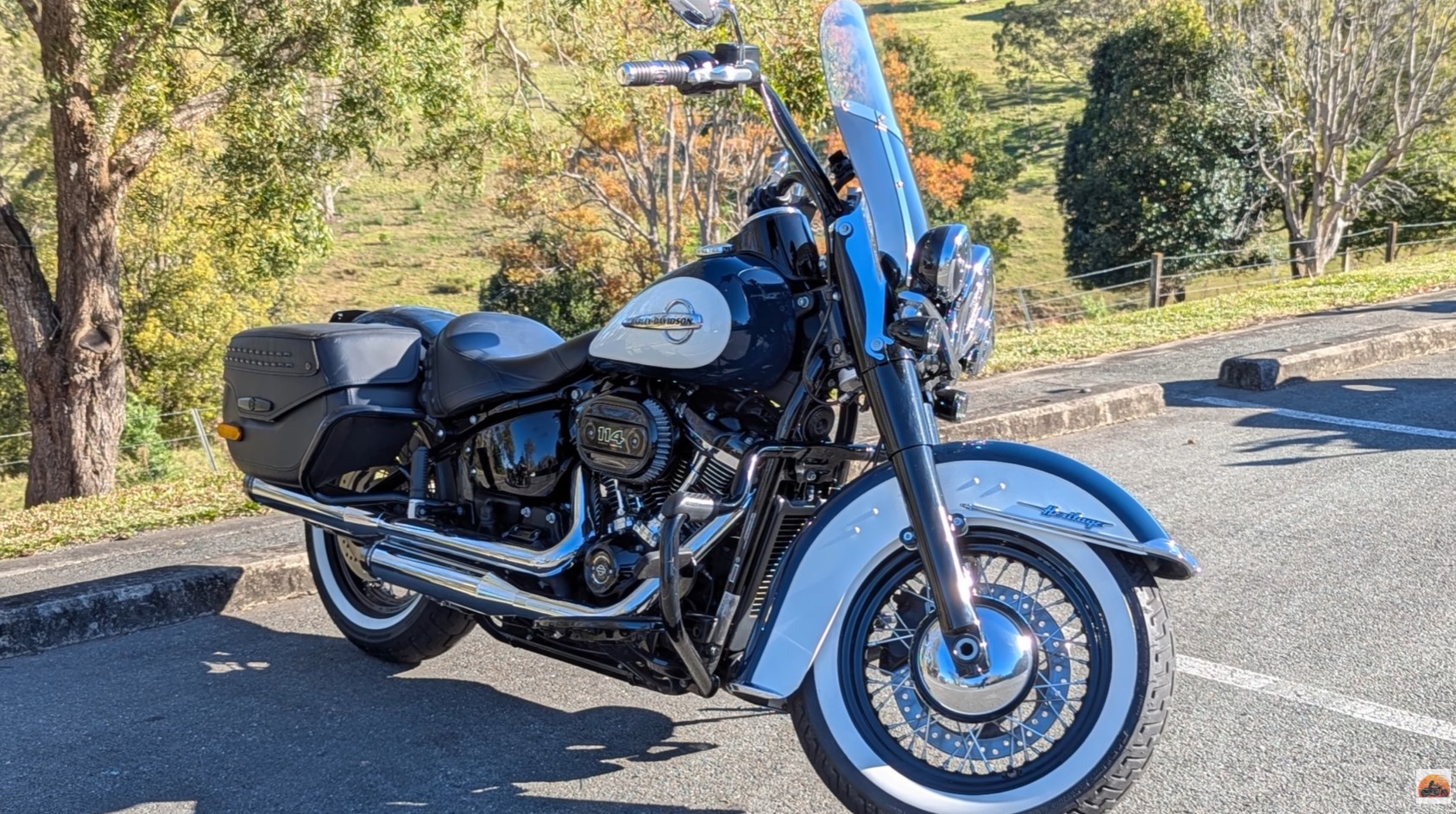
Motorcycle training isn’t just for new riders — it’s one of the best investments any rider can make, no matter how long you’ve been on two wheels. Recently, I took my Harley-Davidson to the Smart Rider Academy Level 1 Advanced Course here in Queensland, and the experience was far more valuable than I expected.
From slow‑speed control to real‑world mountain riding, the day was packed with learning, challenges, and some unforgettable moments. If you’ve ever wondered what these courses are like — or whether they’re worth it — here’s my full breakdown.
Preparing for the Course: Safety First
Before heading out, I gave my Harley a full safety check — tyres, brakes, lights, controls, and fluids. As the instructors reminded us, your bike needs to be roadworthy before you even think about training.
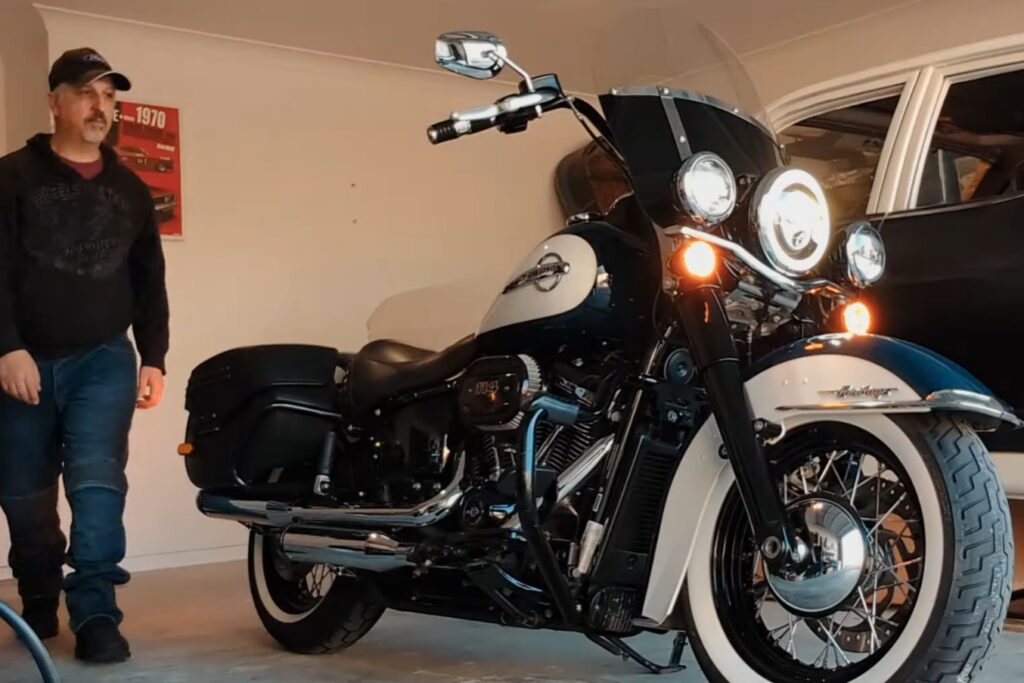
“You just have to make sure your bike’s roadworthy. We should be good.”
I was nervous, and honestly, that’s a good thing. Being slightly uncomfortable means you’re about to grow.
Arriving at the Course: A Mix of Bikes and Great People
When I arrived, riders were already gathering — sports bikes, tourers, a Royal Enfield, and three Harleys including mine. One of the best parts of the day was meeting other riders and hearing why they were there.
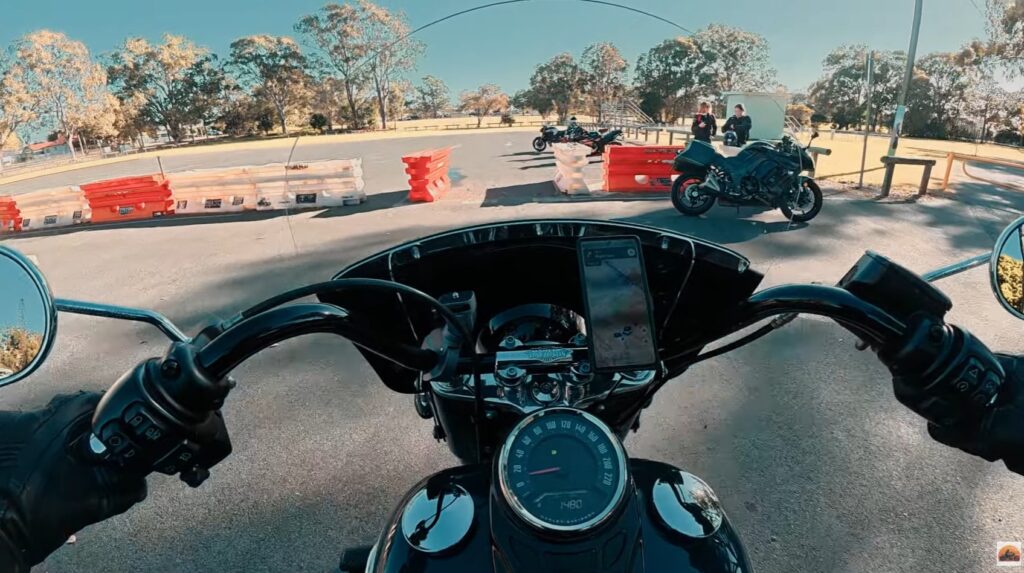
“It was really cool… meeting some of the other riders there was awesome.”
The first part of the course was classroom‑based: videos, discussions, and safety concepts. Nothing overwhelming — just solid, practical information.
Slow-Speed Motorcycle Training: The Foundation of Control
After the classroom session, we moved outside for slow‑speed manoeuvres, which are the backbone of confident riding
1. Straight-Line Slow Ride
The goal: ride at walking pace, feet up, maintaining balance and throttle control.
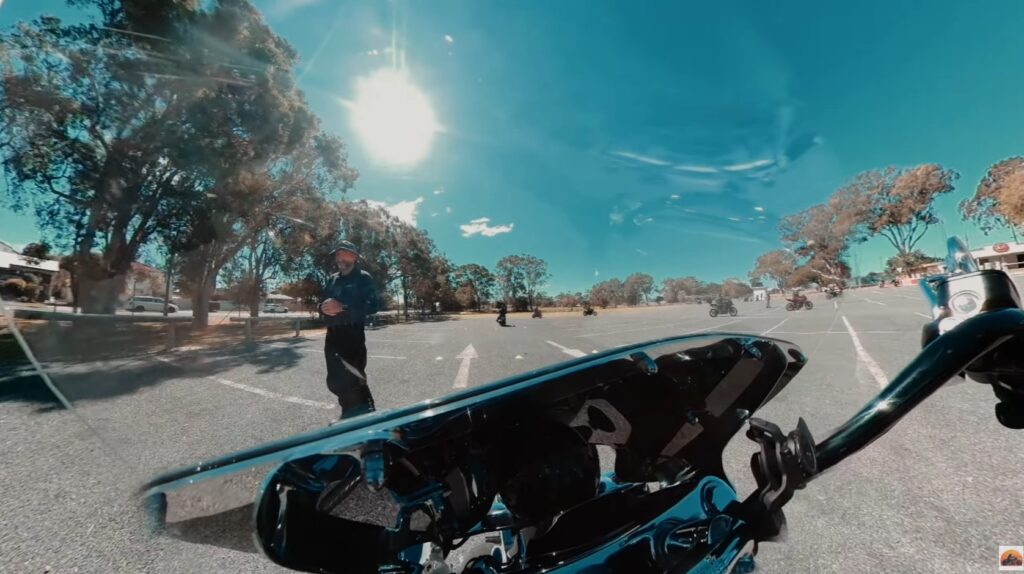
2. Cone Weaving
This drill focused on:
- Maintaining smooth throttle and clutch control
- Looking ahead to the next cone
- Using head and eyes to steer
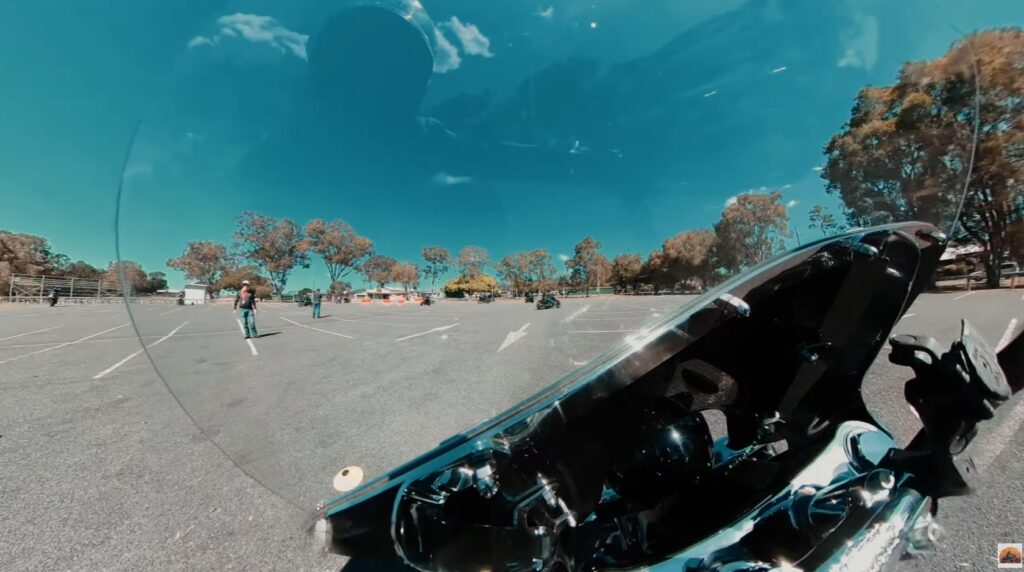
3. U-Turn Practice
This was the toughest part for me.
“I feel like I’m not looking back far enough… definitely a bit of work to do there.”
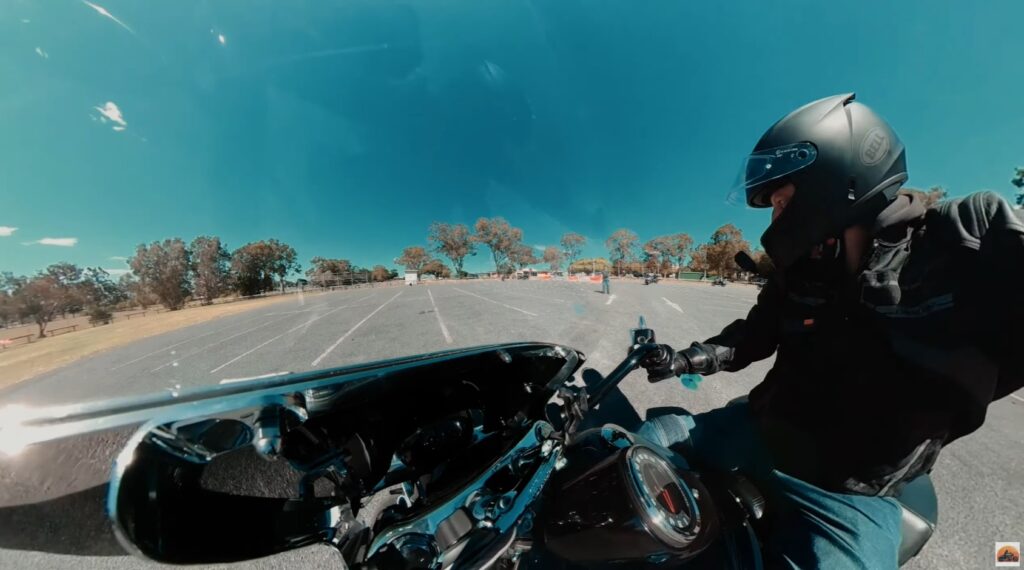
U‑turns are a skill I want to keep improving — tighter radius, more lean, and better head positioning.
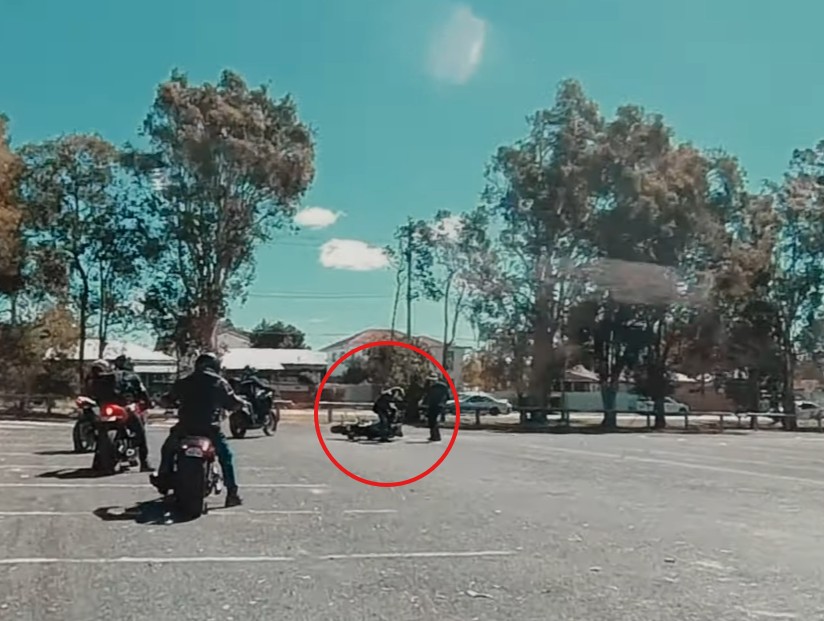
A Reminder: Bikes Can Drop
One rider dropped her bike during the slow‑speed section. No injuries, no damage — but a good reminder that training environments are controlled, but not risk‑free. Crash bars and drop guards are worth every cent.
Heading Out to Mount Mee: Real-World Road Training
After the slow‑speed work, we split into groups of three and headed toward Mount Mee for practical road riding.
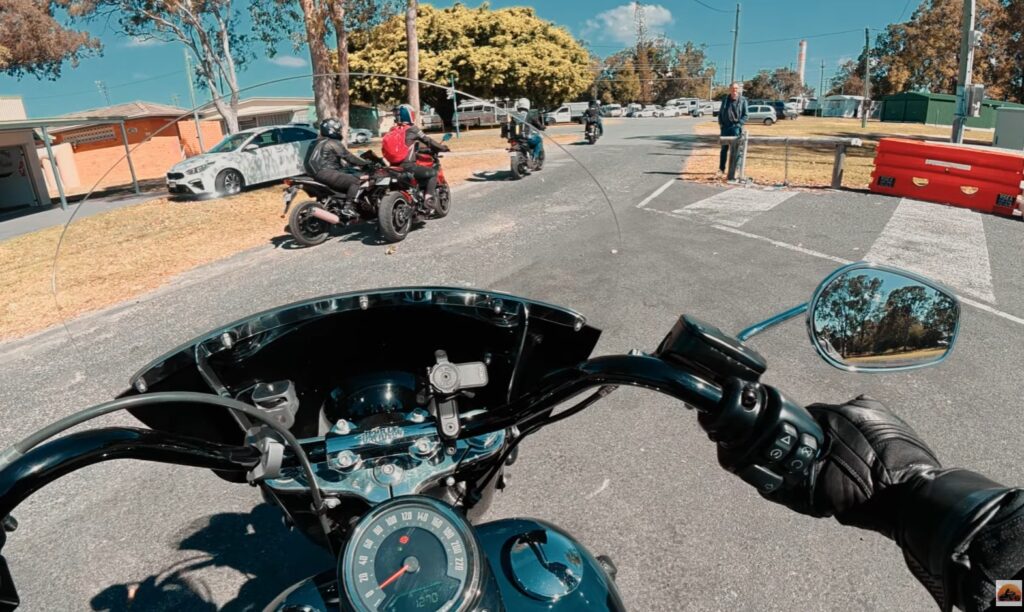
This part of the course was brilliant — real corners, real hazards, real traffic.
Hazard Awareness
One classic danger: a car turning across your lane.
“This is one that I really look out for… I tend to slow down.”
We also regrouped regularly to keep the formation tight and safe.
Unexpected Lane Ending
At one point, I pulled out of a bay and didn’t realise the lane ended immediately.
“I looked to my right… and there’s a car right there.”
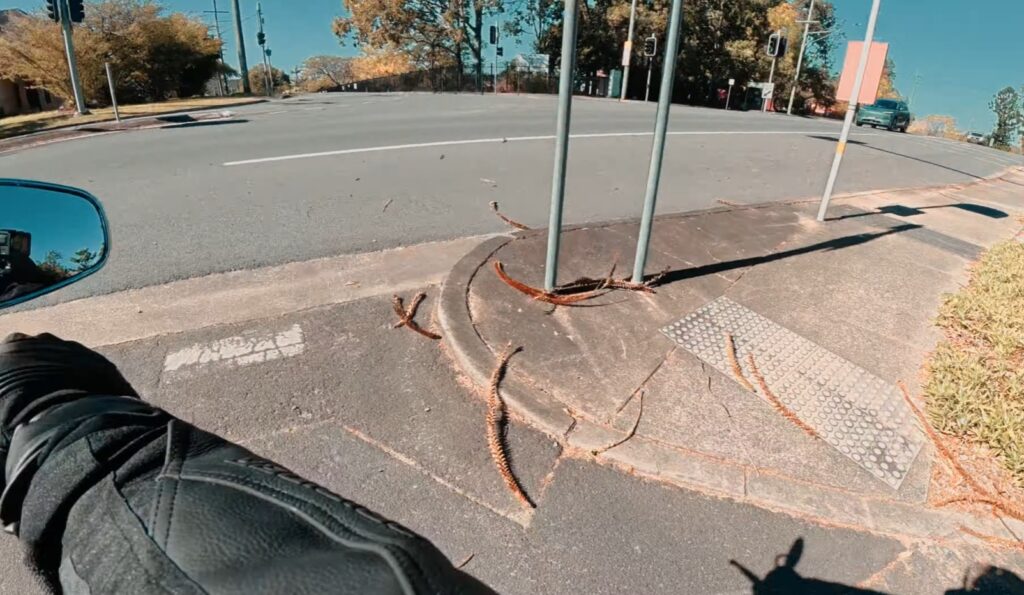
A good reminder that situational awareness never stops.
Scenic Riding and Group Chats
The ride up the mountain was windy but stunning. We stopped a couple of times to regroup and chat.
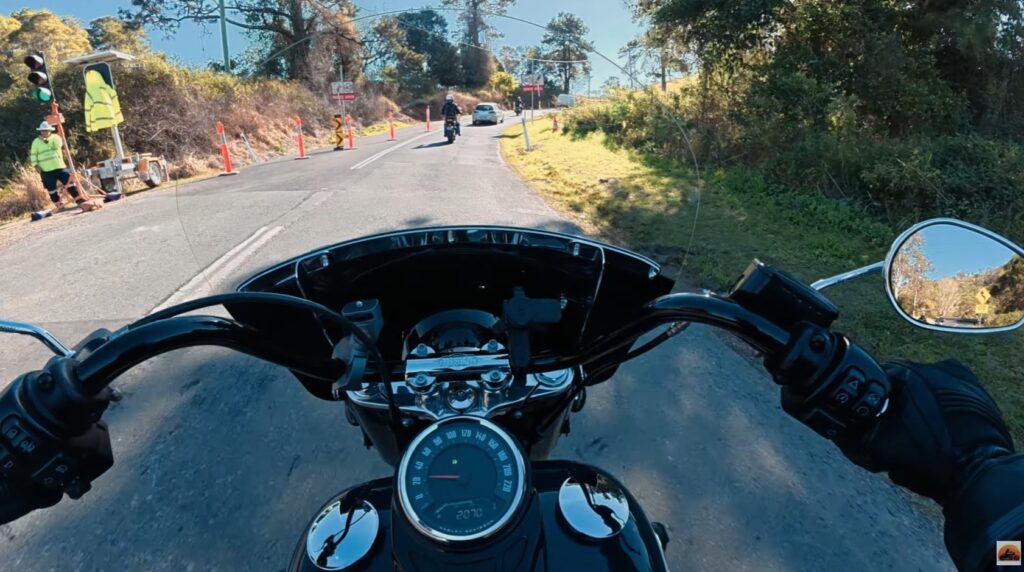
One rider thought my Harley was brand new — a nice compliment, even though it’s six years old and just new to me.
Key Lessons I Took Away From the Course
Here are the biggest takeaways that stuck with me:
1. Speed Dramatically Affects Braking Distance
The instructors showed a graph demonstrating that doubling your speed quadruples your stopping distance.
At 100 km/h:
- Reaction time is 1–1.5 seconds
- You travel ~40 metres before even touching the brakes
- Total stopping distance is around 98 metres
That’s half a football field before you even start slowing down.
2. Braking Isn’t Linear
As you slow down, you shed speed faster near the end of the braking zone. Understanding this helps you judge distances more accurately.
3. Cornering on Public Roads
This wasn’t racetrack cornering — it was real‑world riding.
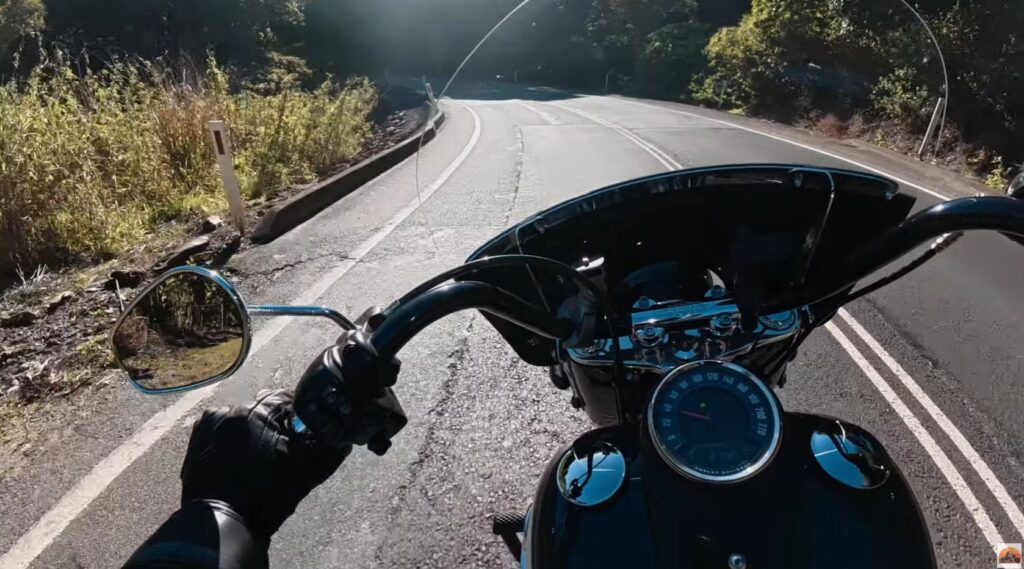
Key points:
- Stay on the outside of the lane for better visibility
- Aim for six seconds of vision ahead
- This gives you time to react to hazards like sticks, gravel, or oncoming vehicles drifting wide
A Tough Moment: A Rider Hits a Stick
Near the end of the ride, one rider hit a stick that flicked up and punctured the bottom of his bike engine. Oil was pouring out — a rough way to end the day, but thankfully he was okay.
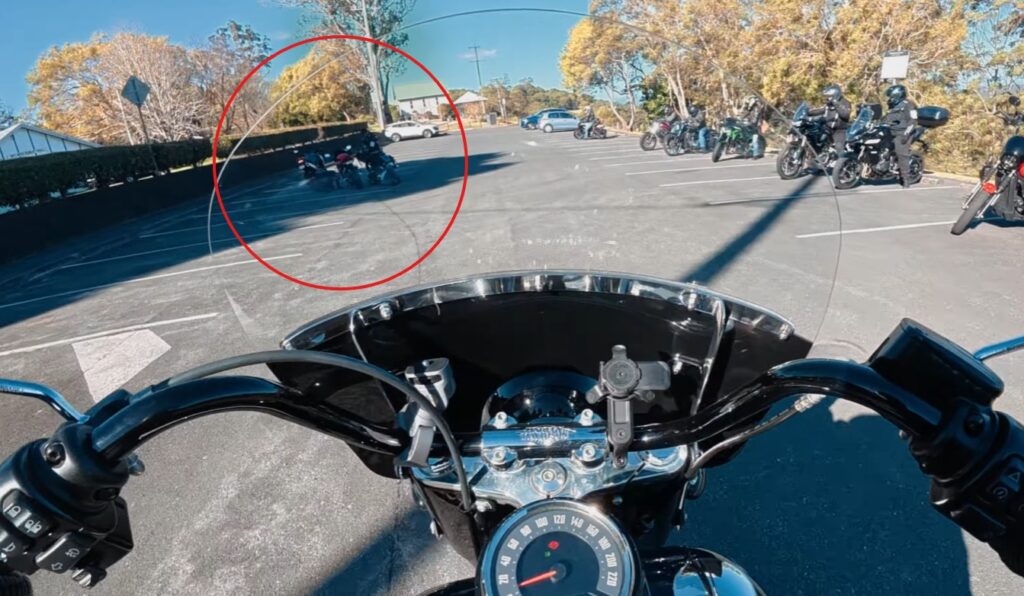
Another reminder that mountain roads can be unpredictable, especially on windy days.
Wrapping Up the Day
After the final stop, I decided to head home. It was already late afternoon, and I still had an hour’s ride ahead. I’d learned a lot, met great people, and pushed myself in ways I hadn’t expected.
“I can’t wait to do another one… I enjoyed talking to a lot of the guys that were there.”
If you’re thinking about doing an advanced motorcycle course — do it. Whether you’re on a Harley, a sports bike, or anything in between, the skills you gain are worth every minute.
Final Thoughts
This course reminded me why I love riding — the challenge, the learning, the community, and the pure joy of being out on the road. I’m already looking forward to the next adventure.
If you enjoyed this write‑up, feel free to check out my other Harley-Davidson rides, mods, and reviews.
Stay safe, ride smart, and I’ll see you on the next one.